
From Ruins to Renewal
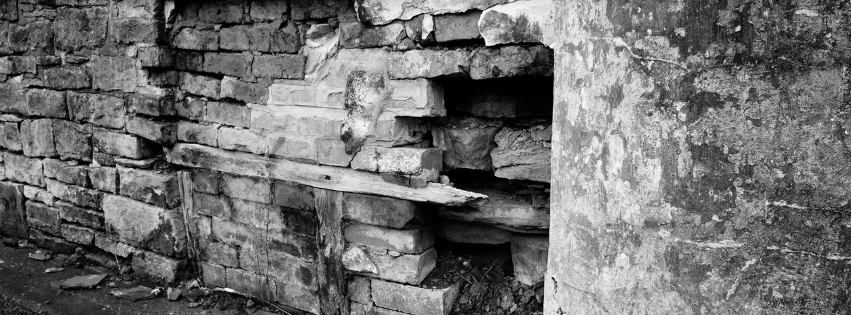
Why God often starts His work by unsettling His people
There is something deeply unsettling about the way God often begins His work.
We live in a moment that prizes momentum—plans, strategies, measurable results. Even in the church, we can feel the pressure to demonstrate progress. If something matters, we assume it must move quickly—and visibly.
But Scripture tells a different story.
More often than not, God’s kingdom work does not begin with action - it starts with grief.
The Ruins We Learn to Tolerate
Nehemiah opens with a report that should stop us in our tracks. Jerusalem—the city associated with God’s name and promises—lies in ruins. The walls are broken down. The gates are burned. The people live in shame.
In the ancient world, walls were not optional. They were protection, identity, and stability. A city without walls was exposed and vulnerable. Jerusalem’s condition was not merely a civic problem; it was a spiritual one. The ruins stood as a public testimony to generations of covenant unfaithfulness.
Nehemiah hears this news while living far away, serving comfortably in the Persian court. He could have treated it as unfortunate but distant—someone else’s problem, another sad report from a broken world.
Instead, he sits down and weeps.
That detail should trouble us.
When was the last time the condition of God’s people actually moved us to sorrow? Not frustration. Not commentary. Not strategy—but grief. When did we last slow down enough to feel the weight of spiritual decline, or the quiet drifting of people from Christ, or the erosion of faith in our own communities?
It is possible to live surrounded by brokenness and remain untouched by it. Over time, familiarity dulls compassion. We learn to speak about spiritual ruin without ever letting it reach our hearts.
That is not maturity. It is a warning sign.
Why God Begins With Burden
God does not begin His work by recruiting the most efficient leaders. He starts by shaping the hearts of His servants.
Before Nehemiah ever lifts a stone, God lays a burden on him. Before he organizes labor or speaks to a king, his heart is aligned with the grief of God Himself.
This pattern is not unique to Nehemiah. God sees the suffering of Israel before He sends Moses. Jesus is moved with compassion for the crowds before He sends out the disciples. Redemptive action consistently flows from divine concern.
The issue, then, is not whether we are informed. We are. The problem is whether we are burdened.
We live in a world saturated with information. Statistics, headlines, updates—they are everywhere. But information alone does not produce faithfulness. A godly burden does something different. It presses in. It weighs on the soul. It refuses to let us remain neutral.
There is a difference between knowing that something is wrong and caring deeply that it dishonors God.
When Burden Turns to Prayer
What makes Nehemiah’s response so instructive is not only that he feels the burden, but what he does with it.
He prays.
And not in a rushed or reactionary way. His prayer is deliberate, Scripture-shaped, and deeply theological. He begins by naming God rightly—great, faithful, covenant-keeping—before he ever mentions the problem.
Then he confesses sin. Not abstractly. Not defensively. He identifies himself with the guilt of the people: “We have sinned.” Even though he did not personally cause the exile, he refuses to stand above it.
That posture is increasingly rare. We live in a culture skilled at diagnosing others. But spiritual leadership does not approach God as an observer. It approaches Him as a participant, acknowledging that we are never as detached from the problem as we would like to believe.
Only then does Nehemiah appeal to God’s promises. He does not invent hope; he remembers it. He takes God at His word and asks Him to act in faithfulness to what He has already said.
This is not manipulation. It is trust.
Providence Hidden in Plain Sight
At the end of the chapter, Nehemiah includes a line that is easy to overlook: “At the time, I was the king’s cupbearer.”
That detail matters.
Long before Nehemiah understood why Jerusalem’s condition would burden him, God had already placed him near power. What appears incidental is actually providential. God had been preparing the answer before the prayer was ever prayed.
That reality reframes how we think about our own lives. We are often tempted to ask what we should do next, when a better question may be where God has already placed us. Our roles, limitations, and seasons are rarely accidental.
God does not always reveal His purposes before He prepares the person.
Beyond the Walls
Ultimately, the story of Jerusalem’s broken walls points beyond itself.
The deeper problem was never masonry. It was sin. And the same is true for us. We cannot rebuild our way back to God. No amount of effort, strategy, or moral resolve can repair what sin has разрушed.
That is why God did not send instructions alone. He sent His Son.
Jesus entered a broken world, bore judgment in our place, and rose again so that sinners could be reconciled to God—not after the walls were fixed, but while they were still in ruins. That is the heart of the gospel.
A Word for the Church
So where does this leave us?
It invites us to examine what truly burdens us. What grieves us reveals what we value. It calls us to let concern lead to prayer rather than commentary. And it reminds us not to despise the places where God has already stationed us.
God is committed to building His kingdom. But He often begins by breaking our hearts—so that we might learn to depend on Him rather than ourselves.
The question is not whether God is at work.
The question is whether we are willing to let Him start with us.